What Does "Investing in 1031 Properties" Actually Mean?
A qualifying Section 1031 exchange may defer eligible gains on investment or business real property when its requirements are met. It is conditional deferral, not an automatically tax-free purchase or elimination of future obligations. Confirm treatment with your QI and independent tax advisers.
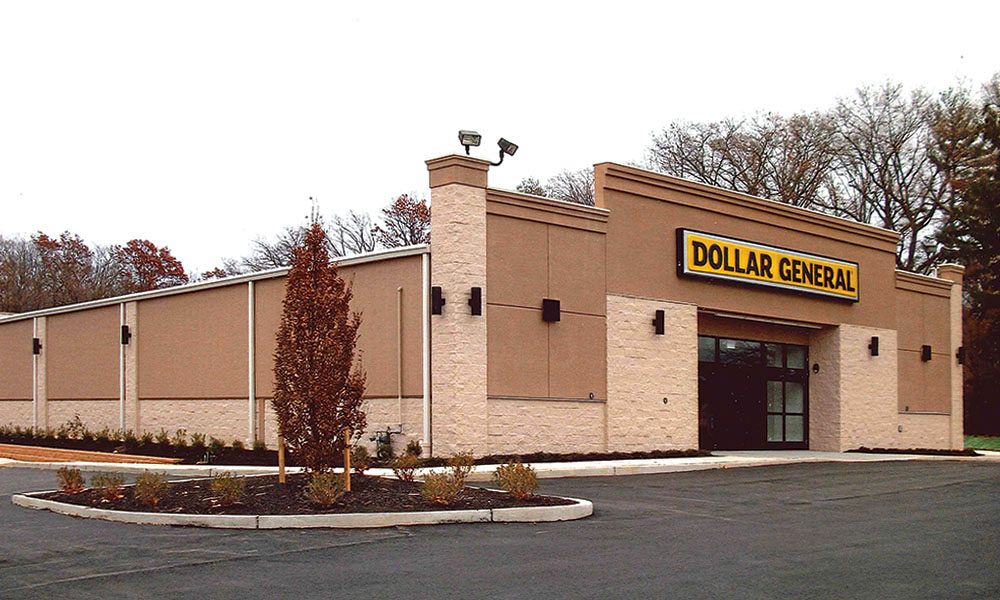
The replacement property in a 1031 exchange is often a single-tenant NNN property — a McDonald's, Dollar General, CVS, or Starbucks where a Fortune 500 corporate tenant pays all operating expenses and sends you a rent check every month with zero landlord responsibilities. NNN has become the dominant 1031 replacement asset class for a simple reason: investors trading out of actively managed apartments or commercial buildings want passive income, not a new set of management headaches. NNN delivers that transition cleanly.
This guide covers the complete process of investing in 1031 NNN properties — from the basic rules through the specific mechanics of finding, evaluating, and closing on a replacement property within the IRS's strict timeline.
The Core 1031 Exchange Rules Every Investor Must Know
The 45-Day Identification Rule
From the date you close the sale of your relinquished property, you have exactly 45 calendar days to formally identify your replacement property in writing to your qualified intermediary (QI). No exceptions. No extensions. Miss this deadline and your exchange fails — the full capital gains tax becomes due immediately.
The 45-day clock is why starting your 1031 NNN property search before you close your relinquished property is so critical. A specialist NNN broker who maintains live off-market inventory can begin matching properties against your criteria weeks before your deadline starts — so Day 1 of the exchange is already day 20 of your effective search.
The 180-Day Closing Rule
You have 180 calendar days from the sale of your relinquished property to close on your replacement property. This window overlaps with the 45-day identification period — you're both identifying and preparing to close within the same 180-day envelope.
For NNN 1031 exchanges, 180 days is typically sufficient to close — NNN transactions are well-understood by title companies, lenders, and QIs and generally close in 30–60 days once under contract. The greater risk is the 45-day identification window, not the closing timeline.
The Three-Property Identification Rule
Under the standard identification rule, you can identify up to three replacement properties of any value. You don't have to close on all three — but you must close on at least one of the properties you identified. This gives you backup options in case your first choice falls through.
For 1031 NNN investors, the most common approach is to identify two or three properties, proceed with due diligence on the best candidate, and close on that property. Having alternatives identified protects you if the first property doesn't survive due diligence.
The 200% Rule (Alternative to Three-Property Rule)
If you need to identify more than three properties, the 200% rule allows unlimited identification as long as the combined value of all identified properties doesn't exceed 200% of the sale price of your relinquished property. This rule is less commonly used but valuable when you're considering multiple smaller NNN properties or want maximum flexibility.
Avoiding Boot (Taxable Cash)
To fully defer your capital gain in a 1031 exchange, you must:
- Acquire a replacement property of equal or greater value than the relinquished property
- Reinvest all of the net proceeds (no cash out)
- Replace or exceed any mortgage paid off on the relinquished property (unless you bring additional cash to close)
Any amount you don't reinvest — or any mortgage debt reduction not offset by cash — is called "boot" and is taxable in the year of the exchange. A well-structured NNN 1031 exchange specifically sizes the replacement property and financing to eliminate boot entirely.
Why NNN Properties Are the Most Popular 1031 Replacement
The IRS's definition of like-kind property for real estate exchanges is very broad: almost any investment real estate can be exchanged for any other investment real estate. An apartment building can exchange into an office building, a vacant lot into a retail center, or a single-family rental into a NNN triple net property.
NNN properties have become the dominant 1031 replacement choice for several reasons:
1. True Passive Income — No Management Transition
Most 1031 investors are leaving actively managed real estate — apartments requiring property managers, office buildings with tenant improvement negotiations, retail centers with tenant mix challenges. The appeal of NNN is the complete management elimination. You're not replacing one active management burden with another. You're replacing active work with passive income.
2. Corporate Credit — The Strongest Rent Guarantee Available
NNN replacement properties are backed by Fortune 500 corporate guarantors — McDonald's Corporation, Starbucks, Dollar General, CVS, AutoZone. The corporate parent guarantees your rent regardless of individual location performance. This is categorically different from the individual tenant credit risk of residential or multi-tenant commercial real estate.
3. Long-Term Lease Certainty
A new NNN 1031 replacement property typically has 15–20 years of primary lease term. For an investor in their 50s or 60s completing a 1031 exchange, a 20-year NNN lease provides income certainty through retirement — without the renewal negotiation pressure of shorter commercial leases.
4. No Mortgage Requirement
If your 1031 proceeds are sufficient to purchase a NNN property outright, you can do an all-cash NNN acquisition with no mortgage. The long-term corporate lease is strong enough collateral for lenders, but NNN investors who don't need leverage often prefer the simplicity of an unencumbered passive income stream.
How to Find 1031 NNN Properties: The Market Reality
The NNN property market is not fully transparent. The best replacement properties — investment-grade tenants, strong locations, long remaining lease terms — are often sold through broker-to-broker relationships before they're publicly listed on LoopNet or CoStar.
For 1031 exchange investors with a 45-day deadline, this market structure creates a specific problem: if you're searching public listings, you're competing with every other 1031 buyer in the country for the same depleted, visible inventory. The best properties are already under contract by the time they show up publicly.
Off-Market NNN Sources
- Selling broker relationships: NNN listing brokers bring deals to buyer brokers they trust before public listing. A buyer's broker with strong relationships gets called first — giving you pre-market access.
- Developer pipeline: New construction NNN properties (brand-new McDonald's, Dollar General, Dutch Bros) are often sold directly from developers at agreed cap rates before construction completes. Your broker's developer relationships determine access.
- Sale-leaseback sourcing: Corporate tenants sometimes sell their owned real estate to investors under new NNN leases. These deals are entirely off-market — created rather than listed.
Evaluating 1031 NNN Replacement Properties: Due Diligence Checklist
The 45-day timeline pressure in a 1031 exchange doesn't eliminate the need for proper due diligence — it compresses it. Here's what needs to happen before you commit to a replacement property:
Lease Review (Most Critical)
- Is the lease truly absolute NNN, or does the landlord retain roof and structure obligations?
- What is the escalation structure? Fixed bumps or CPI-linked?
- Who is the guarantor — corporate parent or franchisee?
- What are the renewal option terms and rent during option periods?
- Are there any termination, relocation, or co-tenancy rights?
Tenant Credit Analysis
- Is the guarantor investment-grade (S&P BBB– or better)?
- For franchisee-guaranteed leases: what are the franchisee's financial statements?
- What is the tenant's recent financial trajectory and brand performance?
Property and Market Analysis
- Traffic counts, site visibility, and parking adequacy
- Proximity to retail generators and co-tenancy context
- In-place rent vs. market rent for this tenant type in this market
- Local market cap rate trends and comparable sales
Physical and Title Due Diligence
- Phase I Environmental Site Assessment
- ALTA survey for easements and encumbrances
- Title commitment review
- Physical property inspection (even in absolute NNN, for lender and resale purposes)
The 1031 NNN Exchange Timeline: Week by Week
| Period | Action |
|---|---|
| Before Day 0 | Retain NNN buyer's broker; begin off-market property search; select qualified intermediary; identify preliminary candidates |
| Day 0 | Relinquished property closes; proceeds go directly to QI; 45-day clock starts |
| Days 1–20 | Active property review; initial lease analysis on top candidates; property visits if needed |
| Days 20–40 | Final due diligence on primary candidate; LOI and purchase contract negotiation |
| Day 45 | DEADLINE: Formal identification submitted to QI in writing |
| Days 46–120 | Specialist due diligence: independent counsel, title, survey, environmental review, lender appraisal |
| Days 120–170 | Loan commitment (if financing); closing preparation; QI coordination |
| Day 180 | DEADLINE: Exchange closes; QI wires proceeds to fund replacement property purchase |
Working With a Specialist 1031 NNN Broker: What to Expect
A 1031 replacement-property broker can help source candidates before the clock starts, evaluate lease economics, and coordinate acquisition work with your QI and independent specialists.
The ESS Group provides NNN property sourcing, investment-focused lease analysis, and buyer representation. Eli's legal training informs his work as your broker.
Our acquisition brokerage includes an investment brief, criteria-led sourcing, lease economics, purchase-term negotiation, and closing coordination. Discuss the scope and compensation arrangement before engagement.
Contact The ESS Group to discuss your 1031 exchange and see current off-market NNN inventory. The earlier in your exchange timeline we connect, the more options we can deliver by your 45-day deadline.
Ready to Invest?
Our advisors specialize in sourcing premium off-market NNN properties for high-net-worth investors and 1031 exchanges. Contact The ESS Group to see available inventory.