The Two Most Requested 1031 NNN Replacement Properties
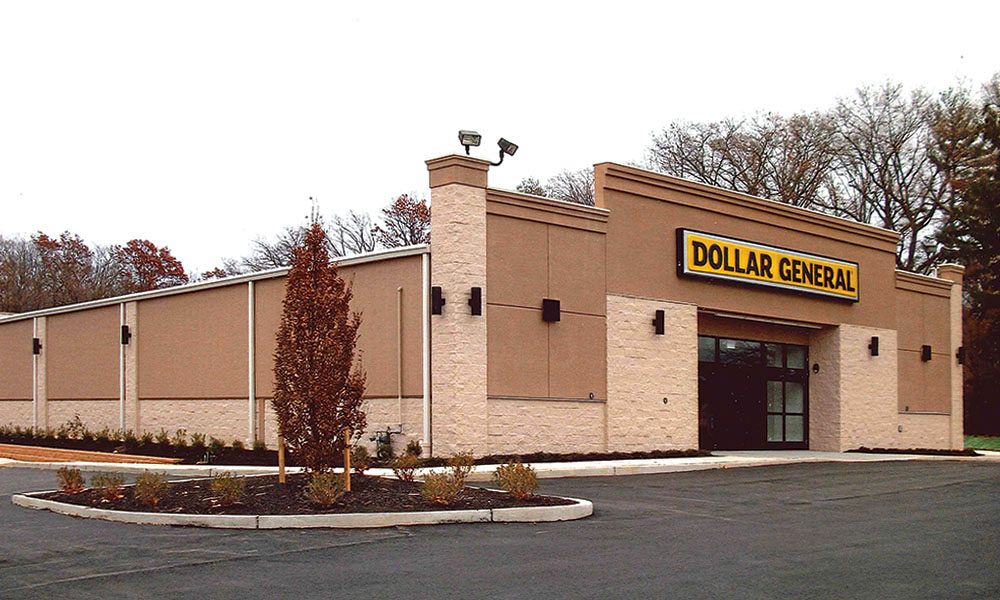
Every week, I talk to 1031 exchange buyers who've narrowed their search to two tenants: Dollar General and McDonald's. They're the most requested NNN replacement properties I see — and for good reason. Both offer absolute NNN leases, corporate credit guarantees, and deep national availability. But they serve different investor profiles, and choosing the wrong one for your exchange can mean overpaying on yield, taking on unintended credit risk, or struggling to close within your 180-day deadline.
Here's the honest 2026 comparison.
Credit: McDonald's Is Meaningfully Stronger
McDonald's Corporation carries a BBB+ credit rating from S&P — two full notches above Dollar General's BBB−. Both are investment grade, but the gap matters in a few ways:
- McDonald's franchisee leases are backed by McDonald's Corporation, not the individual franchisee. The corporate guarantee is explicit.
- Dollar General's BBB− is the lowest investment-grade tier. In a genuine credit stress event, BBB− is the first tier at risk of downgrade to below investment grade ("junk").
- McDonald's has maintained investment-grade status through multiple recessions, the 2008 financial crisis, and COVID — with revenue growth in each downturn.
For buyers where credit quality is the primary consideration — estate planning, fixed-income replacement, or longer-term holds — McDonald's is the stronger choice.
Cap Rate: Dollar General Wins — By Design
In 2026, you can expect:
- Dollar General NNN: 5.5%–7.25% cap rates nationally
- McDonald's NNN: 4.25%–5.75% cap rates nationally (ground leases run 3.75%–4.75%)
Dollar General consistently trades at 75–150 basis points higher cap rates than McDonald's — reflecting the credit rating difference, the lower brand prestige, and the rural/suburban location mix. For investors who need income, that yield premium is real money. On a $2M investment, 100 basis points is $20,000 per year in additional income.
The question isn't which cap rate is higher — it's whether the yield premium adequately compensates you for Dollar General's lower credit quality. In most cases, I believe it does, especially for investors who intend to hold for 10+ years.
Price Point: Dollar General Is Far More Accessible
- Dollar General NNN: $1.2M – $2.8M typical
- McDonald's NNN: $3.5M – $7M typical (ground leases $4M–$9M+)
This is the most practical difference for most 1031 exchange buyers. If you're exchanging out of a California fourplex, a small commercial strip, or a single industrial building, your equity is often in the $1M–$3M range. Dollar General is the investment-grade NNN option that fits that budget. McDonald's — especially ground leases — often requires more equity than smaller exchange buyers have available.
For buyers with $3M+ in exchange equity, McDonald's is fully accessible and worth the serious comparison. For buyers under $2.5M, Dollar General may be the only investment-grade QSR option in your budget.
Lease Structure: Both Are True Absolute NNN
Both Dollar General and McDonald's offer absolute NNN lease structures — the tenant pays all property taxes, building insurance, and maintenance including roof and structure. No landlord obligations.
The differences in practice:
- Dollar General — 15-year initial term, 5-year renewal options, 10% rent bumps every 5 years. Some older leases have minor landlord reserves (a key thing to verify).
- McDonald's — 20-year initial term on company locations, 15–20 years on franchisee locations. Rent bumps vary: 10% every 5 years or CPI-linked. Ground leases often have 20-year primary terms with four or five 5-year options.
McDonald's longer lease terms provide more years of predictable income before a renewal decision is required. For investors who want to minimize future lease management decisions, longer is better.
Availability: Dollar General Has a Structural Advantage
Dollar General opens 700–800 new locations per year. That pipeline creates constant new NNN sale-leaseback inventory. For 1031 exchange buyers with 45-day identification deadlines, Dollar General's availability is a meaningful advantage — you can almost always find qualifying inventory.
McDonald's deal flow is thinner, particularly for fee-simple locations. When strong McDonald's locations come to market, they attract institutional buyers, 1031 buyers, and private equity simultaneously. Competition per deal is meaningfully higher. Without pre-market access through broker networks, McDonald's deals can be difficult to close within a tight 45-day window.
Resale Market: Both Are Liquid — McDonald's Commands Premium
Both tenants have deep national resale markets. NNN properties sell in 30–60 days in most markets for both Dollar General and McDonald's. However:
- McDonald's commands premium pricing at resale. A well-located McDonald's with 10+ years of lease term remaining is one of the most sought-after assets in NNN.
- Dollar General's rural locations can face thinner buyer pools at resale. Urban and suburban Dollar Generals resell quickly; rural locations take longer.
Which Is Right for Your 1031 Exchange?
Choose Dollar General if: your equity is under $2.5M, you want higher current income yield, you need reliable deal availability within the 45-day window, or you're comfortable with BBB− credit for the yield premium.
Choose McDonald's if: your equity is $3.5M+, credit quality is your primary driver, you want maximum lease term (20 years) and brand recognition, you're planning for estate transfer, or you can access pre-market deals through a broker network with McDonald's deal flow.
Both can be outstanding 1031 exchange investments. The right choice depends on your equity range, income needs, hold period, and risk tolerance — not on which brand you eat at more often.
The ESS Group actively sources both Dollar General and McDonald's NNN inventory — including off-market deals not available on LoopNet. If you're approaching a 1031 exchange and want to compare specific deals head-to-head with current cap rates, contact us before your sale closes.
Ready to Invest?
Discuss your property criteria, compare NNN lease economics, and plan your search with The ESS Group as your buyer's broker.