Why Investors Use 1031 Exchanges to Buy NNN Properties
A 1031 exchange into a NNN property is one of the most powerful moves available to a real estate investor. In a single transaction, you can defer potentially hundreds of thousands of dollars in capital gains tax — and simultaneously transition from an active, management-intensive property into a truly passive, corporate-guaranteed income stream.
For investors who have spent years managing apartments, office buildings, or retail centers, the appeal is straightforward: exchange the equity from a sold property into an absolute NNN property, have a Fortune 500 tenant send rent checks for 15 years, and never receive another maintenance call. The 1031 exchange makes this transition tax-deferred, preserving all the equity to deploy into the replacement property rather than paying 20–30% in combined federal and state capital gains taxes first.
1031 Exchange Fundamentals (What Every NNN Buyer Needs to Know)
A qualifying Section 1031 exchange may defer eligible gains when its requirements are met. Deferral is not elimination; boot, basis, financing, deadlines, ownership, residency, and state rules affect treatment. Any later transfer or exchange requires separate review.
The Core Rules
- 45-day identification window: From the date your relinquished property closes, you have exactly 45 calendar days to formally identify potential replacement properties in writing to your Qualified Intermediary. No extensions are granted for any reason.
- 180-day closing window: You must close on your replacement property within 180 calendar days of the relinquished property closing — or by your tax filing deadline, whichever is earlier.
- Qualified Intermediary (QI) requirement: You cannot touch the sale proceeds at any point during the exchange. A QI holds the funds in escrow between the sale and the purchase. Using the wrong QI or accidentally receiving the funds disqualifies the exchange.
- Like-kind requirement: For real estate, "like-kind" is broadly interpreted — you can exchange an apartment building for a NNN retail property, a warehouse for a NNN restaurant, or raw land for a NNN pharmacy. Almost any investment real property qualifies.
- Value, equity, and financing: These interact with boot and other requirements. Your QI and tax advisers should calculate the actual exchange treatment; replacement value alone is insufficient.
Why NNN Properties Are the #1 Choice for 1031 Exchange Buyers
NNN properties are the dominant replacement property category for 1031 exchange investors, and for good reason. The 45-day identification window creates enormous pressure to identify qualifying properties quickly. NNN properties offer several structural advantages in this environment:
Broad Price Points Match Any Exchange Size
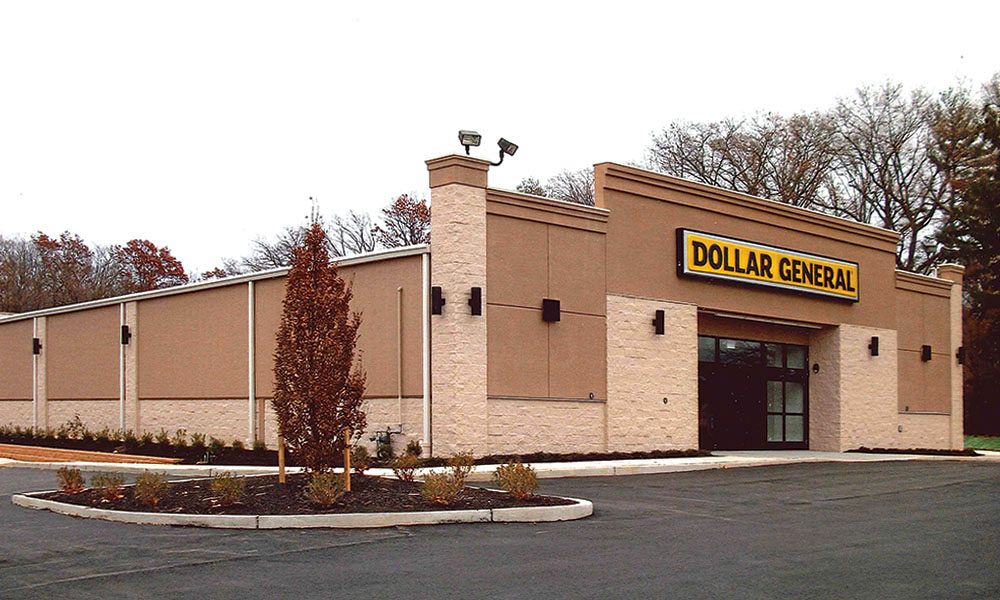
NNN properties range from roughly $1.5M (a single-tenant Dollar General in a secondary market) to $20M+ (a long-term CVS or Walgreens in a major metro). This price range accommodates most 1031 exchange scenarios, from investors rolling a sold duplex up to institutional investors exchanging out of large commercial assets.
Passive Management Matches Post-Exchange Investor Goals
Most 1031 exchange investors are selling a property precisely because they want out of active management. An absolute NNN replacement property — where the tenant handles every expense — delivers the maximum passive income available in real estate.
Long Lease Terms Provide Certainty
A 15-year corporate NNN lease provides near-certain income for a 1031 investor. The exchange effectively monetizes the deferred capital gain into a long-term, predictable cash flow stream backed by an investment-grade corporate tenant.
Favorable Financing Enhances Returns
NNN properties with investment-grade tenants and long lease terms qualify for some of the most favorable commercial financing available — often 65–70% LTV at competitive rates. For 1031 buyers, leveraging the replacement property amplifies cash-on-cash returns while still deferring tax on the full equity amount.
The 1031 NNN Exchange Process: Step by Step
Step 1: Engage a Qualified Intermediary Before Closing
The QI must be engaged before your relinquished property closes. Attempting to set up the exchange after the fact disqualifies it entirely. The QI prepares exchange agreement documents, holds the proceeds, and provides the formal identification forms you'll use on Day 45.
Step 2: Begin NNN Property Search Immediately
Do not wait until your relinquished property closes to start searching for NNN replacement properties. Begin discussions with a NNN advisor — like The ESS Group — 60 to 90 days before your anticipated closing. The 45-day window sounds long but moves extremely fast when you factor in due diligence, lender underwriting, and purchase agreement negotiations.
Step 3: Identify Properties by Day 45
You must submit a written list of identified properties to your QI by midnight on Day 45. The standard identification rules allow you to name up to three properties of any value ("three-property rule") or any number of properties whose total value doesn't exceed 200% of the relinquished property value ("200% rule"). Most exchange buyers identify two or three NNN properties to create optionality in case one falls out of escrow.
Step 4: Execute Due Diligence and Close
Once under contract, NNN due diligence focuses heavily on lease review — verifying the actual lease language matches the marketing representations, confirming the tenant's corporate guarantee, reviewing rent escalation provisions, and assessing the physical condition and location quality of the property. Closing must occur by Day 180.
1031 Exchange Into Absolute NNN Properties
For the most passive post-exchange outcome, absolute NNN properties are the optimal 1031 replacement category. An exchange into an absolute NNN property combines:
- Full capital gains tax deferral on the relinquished property
- Zero post-acquisition landlord expense obligations
- A corporate-guaranteed income stream for 10–20 years
- An asset that can be easily held in a trust or passed to heirs
The ESS Group frequently structures 1031 exchanges into absolute NNN properties for California clients — where capital gains tax rates are among the highest in the country, making the tax deferral particularly valuable.
Common 1031 NNN Exchange Mistakes to Avoid
- Missing the 45-day deadline: There are no extensions. If you fail to identify by Day 45, the exchange fails and you owe the full capital gains tax.
- Accepting "NNN" marketing without lease review: Many listings are marketed as NNN when they are actually modified gross or even gross leases. Always have the actual lease reviewed before purchasing.
- Underestimating financing timelines: Commercial lenders take 30–60 days minimum. Starting the loan process after identifying the property often creates dangerous timeline pressure.
- Forgetting depreciation recapture: The 1031 exchange defers capital gains but depreciation recapture tax (25% federally) is also deferred and must be tracked accurately. A CPA experienced in 1031 exchanges is essential.
- Choosing yield over lease quality: A higher cap rate NNN property often comes with a weaker tenant, shorter lease term, or problematic location. For a 1031 buyer who cannot easily sell mid-lease without tax consequences, lease quality should be prioritized.
How The ESS Group Helps 1031 Exchange NNN Buyers
Eli's legal background informs property evaluation and lease analysis as your real estate broker. For 1031 exchange buyers, our brokerage work includes:
- Pre-market access to NNN inventory to beat the 45-day deadline
- Investment-focused lease analysis as your broker, including landlord obligations and renewal provisions
- Acquisition and financing coordination alongside your independent counsel, tax advisers, and QI, who determine structure and exchange mechanics
- National scope to identify the strongest available NNN properties regardless of geography
Contact The ESS Group today to discuss your 1031 exchange timeline and available NNN inventory that matches your investment objectives.
Ready to Invest?
Discuss your property criteria, compare NNN lease economics, and plan your search with The ESS Group as your buyer's broker.