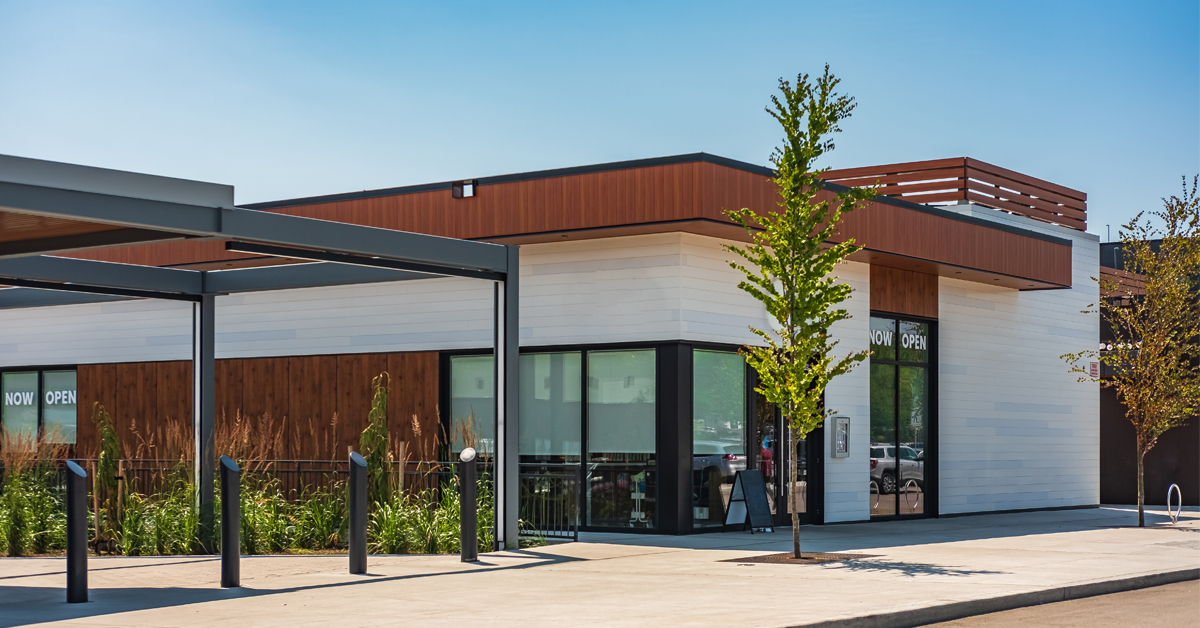
What STNL Means — and Why the Industry Uses the Term
STNL stands for Single Tenant Net Lease. It's the industry term — used by brokers, institutional investors, REITs, and appraisers — for commercial real estate occupied entirely by one tenant under a lease that transfers most or all operating expenses to that tenant.
You'll hear STNL, NNN, triple net, and absolute NNN used somewhat interchangeably in the market. Technically, they describe a spectrum:
- Net Lease (N): Tenant pays some expenses beyond base rent
- Double Net (NN): Tenant pays property taxes and insurance; landlord handles maintenance
- Triple Net (NNN): Tenant pays taxes, insurance, and maintenance
- Absolute NNN: Tenant pays everything — including roof and structure — with no landlord obligations whatsoever
When serious NNN investors say "STNL," they typically mean absolute NNN or very close to it — properties where the landlord's role is purely passive.
The STNL Tenant Credit Spectrum
The most important variable in any STNL acquisition is the tenant's credit quality. The building is often just a box. The value of the investment lives in the lease — specifically, in who is obligated to pay rent.
Investment-Grade STNL (BBB– or higher, S&P)
Investment-grade tenants are publicly traded corporations with S&P ratings of BBB– or better. These include McDonald's (BBB+), Starbucks (BBB+), Dollar General (BBB), CVS (BBB), AutoZone (BBB), and 7-Eleven (A–). The corporate parent guarantees every rent payment regardless of any individual store's performance. Cap rates for investment-grade STNL typically range from 4.25% to 5.75%.
Non-Rated National Credit STNL
Some of the strongest STNL operators are private companies without public debt ratings — Chick-fil-A, Dutch Bros, In-N-Out, Hobby Lobby, and Raising Cane's are notable examples. These tenants are often financially stronger than their rated peers (private ownership means no leveraged buyout risk, no quarterly earnings pressure) but lack an S&P rating because they don't issue public debt. Cap rates: 5.00% to 6.75%.
Franchisee-Guaranteed STNL
When a Subway, a franchised Burger King, or a regional fast food operator signs a lease, the guarantee runs from the franchisee entity — not the corporate franchisor. The brand is national, but the credit is local. These deals typically trade at cap rates of 6.00% to 8.00%+ to reflect the higher tenant risk.
How a Specialized STNL Broker Sources Deals
The STNL market is not a transparent marketplace. Unlike residential real estate where every listing is on Zillow, and unlike stocks where prices are public, STNL deal flow exists largely in private networks of broker relationships.
Broker-to-Broker Networks
Selling brokers (representing the seller/landlord) bring deals to buyer brokers they trust to close — before publicly listing. A STNL broker with strong relationships gets called first. The buyer gets access to the deal before institutional competition can mobilize.
Developer Direct
New construction STNL properties — a brand-new McDonald's in a Phoenix suburb, a just-completed Dollar General in a Tennessee growth corridor — are often sold directly from developers at agreed cap rates before the property is even built. A STNL broker with developer relationships can deliver build-to-suit NNN deals unavailable anywhere publicly.
Sale-Leaseback
Corporate tenants sometimes own their real estate and choose to sell it to investors under a new long-term NNN lease — monetizing the real estate while retaining operational control. Sale-leaseback transactions create STNL inventory entirely outside the listed market.
Direct Seller Outreach
Long-term NNN property holders sometimes want to sell quietly — without a public listing, without a full marketing process, and often at a modest discount in exchange for certainty and speed. Proactive outreach to these sellers is another channel for off-market STNL deal flow.
The STNL Acquisition Due Diligence Checklist
Once a deal is under contract, due diligence on a STNL property covers five main areas:
1. Tenant Credit Analysis
Review the guarantor's financial statements (public filings for rated companies; direct financials for private companies), credit rating history, unit-level performance where available, and overall corporate financial trajectory. A tenant that was investment-grade three years ago may have deteriorated.
2. Lease Abstract Review
Every STNL lease must be reviewed in full — not just the summary on the offering memorandum. Key items: who pays for roof and structural repairs (true absolute NNN vs. modified), renewal option terms and rent during renewal periods, co-tenancy clauses (particularly in shadow-anchored deals), permitted assignment and subletting rights, termination rights, and any landlord consent requirements.
3. Rent-to-Market Analysis
Is the in-place rent above or below market for that tenant type in that market? Above-market rent creates repricing risk at renewal. Below-market rent may indicate a long-term value play as rents escalate to market over time. Neither is necessarily bad — but both need to be understood.
4. Physical Inspection
In a true absolute NNN lease, the tenant handles all maintenance. But a physical inspection still matters for lender requirements, future resale, and understanding deferred maintenance that the tenant should be addressing. Site-specific factors — traffic counts, visibility, parking ratio, outparcel position — also matter for long-term value.
5. Title, Survey, and Environmental
Standard commercial due diligence: ALTA survey, Phase I environmental assessment, title commitment review for easements, restrictions, and encumbrances that might affect use or future sale.
NNN Lease Terms That Matter Most in STNL
Not all NNN leases are equal. These are the terms that experienced STNL brokers focus on:
- Lease Term Remaining: Primary term plus option periods. Shorter primary term = higher risk, higher cap rate. 10+ years remaining preferred for most buyers.
- Rent Escalations: Fixed percentage bumps (10% every 5 years) vs. CPI-linked increases. Fixed bumps are more predictable; CPI-linked can outperform in high-inflation environments.
- Roof and Structure Responsibility: In an absolute NNN, tenant pays. In a modified NNN, landlord retains roof and structure. This distinction significantly affects the value and risk profile.
- Assignment Rights: Can the tenant assign the lease to a franchisee without landlord consent? If the corporate parent assigns to a franchisee, the credit quality changes dramatically.
- Relocation/Termination Rights: Does the tenant have any right to terminate the lease early or relocate to a different location? Dark store clauses and co-tenancy rights need careful review.
Working with The ESS Group as Your STNL Broker
The ESS Group specializes in single tenant net lease acquisitions for investors and 1031 exchange buyers. Eli's legal background informs investment-focused analysis as your broker.
Our process includes a criteria brief, property sourcing, lease economics, specialist diligence coordination, purchase-term negotiation, and closing coordination. Contact us to discuss your STNL search.
Ready to Invest?
Discuss your property criteria, compare NNN lease economics, and plan your search with The ESS Group as your buyer's broker.